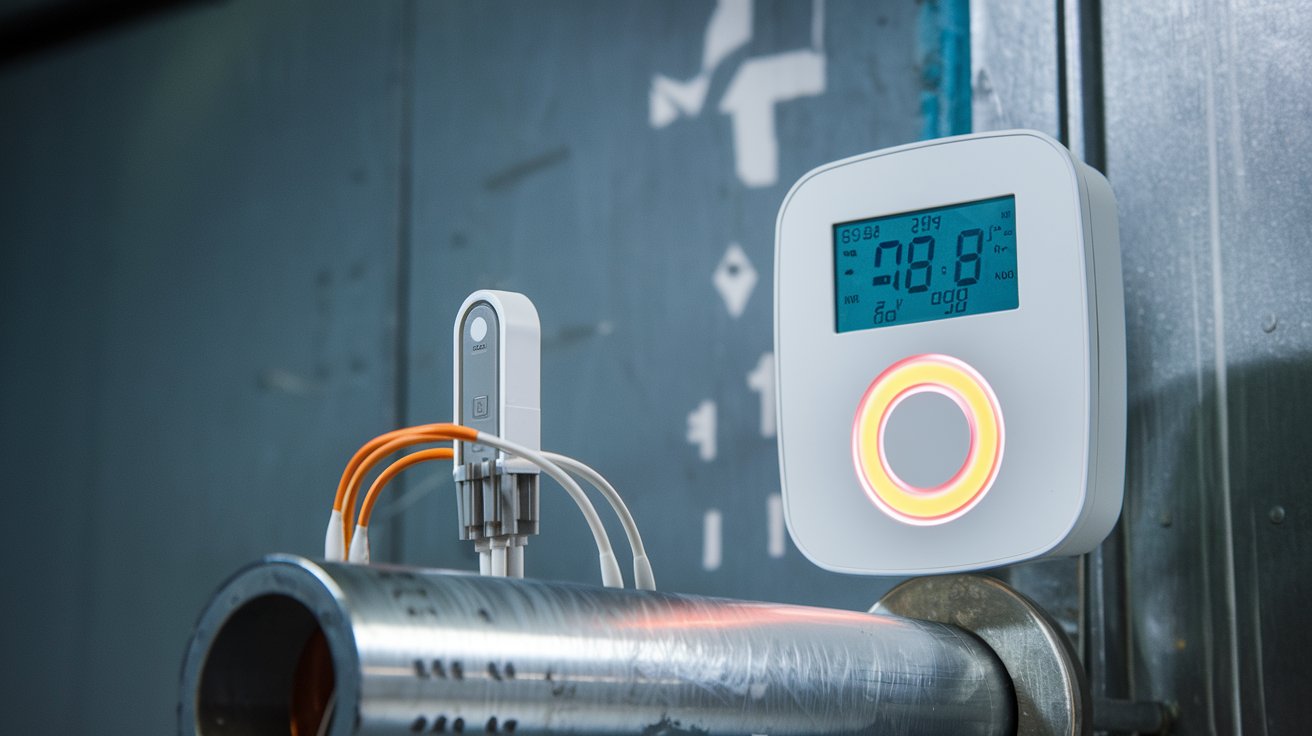
A wireless temperature monitoring system provides real-time temperature tracking without physical connections, using WiFi, cellular, or Bluetooth technology. These systems are essential for protecting sensitive equipment, food storage, and maintaining optimal environmental conditions across homes, restaurants, hospitals, and industrial facilities throughout the United States.
What Is a Wireless Temperature Monitoring System
A wireless temperature monitoring system consists of battery-powered sensors that transmit temperature data to a central hub or cloud platform without cables. These systems typically include temperature sensors, wireless transmitters, data loggers, and monitoring software that provides real-time alerts and historical data analysis. Modern systems can monitor temperatures ranging from -40°F to 185°F with accuracy within ±0.5°F.
The system works by placing wireless temperature sensors in critical locations where they collect data at preset intervals, typically every 1-15 minutes. This data is then transmitted via WiFi, cellular networks, or proprietary radio frequencies to monitoring platforms accessible through smartphones, tablets, or computers. Advanced systems integrate with building management systems and can trigger automated responses when temperatures exceed predetermined thresholds.
Best Wireless Temperature Monitoring Systems for Different Applications
Selecting the best wireless temperature monitoring system depends on specific application requirements, coverage area, and integration needs. Commercial-grade systems like SensorPush, Monnit, and Govee offer different features optimized for various environments and budgets in 2025.
Best WiFi Temperature Sensor for Home Use
For residential applications, the best WiFi temperature sensor for home combines affordability with reliable performance. SensorPush HT1 leads home applications with its 325-foot range, smartphone alerts, and unlimited cloud data storage for $59. Govee WiFi Temperature Humidity Monitor offers budget-friendly monitoring at $25 with email and app notifications. These sensors typically consume minimal bandwidth and provide continuous monitoring with battery life exceeding 12 months.
Industrial Wireless Temperature Monitoring Solutions
An industrial wireless temperature monitoring system requires ruggedized sensors with extended range and advanced analytics. Monnit industrial sensors operate in temperatures from -40°F to 185°F with IP67 waterproof ratings and 10+ year battery life. These systems cost $150-$300 per sensor but provide NIST-traceable calibration, compliance reporting, and integration with SCADA systems essential for pharmaceutical, food processing, and manufacturing facilities.
WiFi Temperature Sensor Applications and Specializations
Different environments require specialized WiFi temperature sensor configurations to ensure optimal performance and compliance with industry regulations. Understanding specific application requirements helps select appropriate sensor types and monitoring intervals.
WiFi Temperature Sensor for Freezer Monitoring
A WiFi temperature sensor for freezer must operate reliably in sub-zero conditions while maintaining wireless connectivity through metal freezer walls. Specialized freezer sensors like the Temp Stick use external antennas and operate from -40°F to 140°F. These sensors provide critical alerts within 1 minute of temperature deviations, preventing food spoilage that costs U.S. restaurants approximately $162 billion annually according to 2024 FDA statistics.
Alert-Enabled Temperature Monitoring
Modern WiFi temperature sensor with alerts systems provide multi-channel notifications including SMS, email, phone calls, and push notifications. Advanced alert systems allow customizable thresholds, escalation procedures, and multiple recipient lists. Systems like iMonnit offer alert delays from immediate to 60 minutes, preventing false alarms while ensuring rapid response to genuine temperature excursions that could compromise product integrity.
Remote Temperature Monitoring Technologies
Remote temperature monitoring via cell phone has revolutionized facility management by enabling 24/7 monitoring from any location with internet connectivity. Cellular-based systems eliminate WiFi dependency and provide reliable monitoring even during network outages.
Cellular-Based Temperature Monitoring
Cellular temperature monitoring systems use 4G LTE or 5G networks to transmit data, making them ideal for remote locations without WiFi infrastructure. These systems typically cost $200-$400 per sensor with monthly data plans ranging from $10-$30. Battery life extends 2-5 years depending on transmission frequency, making cellular solutions cost-effective for long-term deployments in warehouses, cold storage facilities, and outdoor applications.
Monitoring Without WiFi Infrastructure
Learning how to monitor temperature remotely without WiFi involves using cellular gateways, LoRaWAN networks, or satellite communication systems. Zigbee and proprietary radio frequency systems create mesh networks spanning up to 2 miles with repeaters. These solutions serve agricultural applications, construction sites, and remote facilities where traditional internet connectivity is unavailable or unreliable.
IoT Integration and Smart Building Applications
Modern temperature sensor in IoT ecosystems integrate with building automation systems, creating intelligent environments that optimize energy efficiency and occupant comfort while maintaining precise environmental controls.
IoT-enabled wireless temperature monitoring systems connect with platforms like Amazon AWS IoT, Microsoft Azure IoT, and Google Cloud IoT Core, enabling advanced analytics, predictive maintenance, and automated climate control. These integrations reduce energy consumption by 15-25% according to 2024 Department of Energy studies while improving system reliability through predictive failure analysis.
Installation and Setup Best Practices
Proper installation of wireless temperature monitoring systems ensures accurate readings and reliable operation. Sensor placement should avoid direct sunlight, heat sources, and air circulation paths that could skew readings. Optimal mounting heights range from 4-6 feet above floor level in most applications.
Network configuration requires adequate WiFi signal strength with minimum -70 dBm signal levels for reliable data transmission. Battery-powered sensors should be easily accessible for maintenance while remaining secure from tampering. Initial calibration using NIST-traceable reference thermometers ensures measurement accuracy meets regulatory requirements for pharmaceutical, food service, and healthcare applications.
Cost Analysis and ROI Considerations
Investment in wireless temperature monitoring systems typically pays for itself within 6-18 months through prevented product losses, reduced labor costs, and improved compliance documentation. Home systems range from $25-$150 per sensor, while commercial systems cost $150-$500 per monitoring point including software licenses.
Annual operating costs include battery replacements ($10-$25 per sensor), cellular data plans for remote systems ($120-$360 annually), and cloud storage subscriptions ($50-$200 annually). The average ROI for food service applications reaches 300% within the first year by preventing spoilage events averaging $2,000-$15,000 per incident according to 2024 National Restaurant Association data.
Regulatory Compliance and Documentation
Wireless temperature monitoring systems provide automated compliance documentation for FDA, USDA, and state health department regulations. Systems generate tamper-proof records with timestamps, sensor calibration dates, and audit trails required for HACCP compliance in food service and pharmaceutical applications.
Modern systems offer 21 CFR Part 11 compliance for pharmaceutical applications, including electronic signatures, secure data transmission, and long-term data retention. Automated reporting reduces compliance documentation time by 70% while improving accuracy compared to manual temperature logging methods still used by 40% of U.S. food service establishments as of 2024.
Future Technology Trends in Temperature Monitoring
Emerging technologies in wireless temperature monitoring systems include artificial intelligence-powered predictive analytics, 5G connectivity for ultra-low latency applications, and energy harvesting sensors that eliminate battery replacements. Edge computing capabilities enable real-time decision making without cloud connectivity.
Integration with augmented reality systems allows technicians to visualize temperature data overlaid on physical equipment, while blockchain technology ensures tamper-proof data integrity for critical applications. These advances will reduce system costs by 40% while improving accuracy and reliability through 2025 according to IoT industry forecasts.
Related video about wireless temperature monitoring system
This video complements the article information with a practical visual demonstration.
Questions & Answers
What is the range of most wireless temperature sensors?
Most WiFi temperature sensors have a range of 100-300 feet indoors and up to 1000 feet in open areas. Cellular-based systems provide unlimited range anywhere with cell tower coverage, while proprietary radio frequency systems can extend 2+ miles with repeaters.
How long do batteries last in wireless temperature sensors?
Battery life varies from 12-24 months for basic sensors transmitting every 15 minutes, up to 10+ years for industrial sensors with optimized power management. Factors affecting battery life include transmission frequency, temperature extremes, and wireless signal strength.
Can wireless temperature sensors work during power outages?
Battery-powered wireless sensors continue operating during power outages, but WiFi connectivity may be lost unless backup power supports network equipment. Cellular-based systems maintain connectivity as long as cell towers have backup power, typically 24-72 hours.
What accuracy can I expect from wireless temperature sensors?
Quality wireless temperature sensors provide accuracy within ±0.5°F to ±1°F across their operating range. Industrial-grade sensors offer ±0.2°F accuracy with NIST-traceable calibration certificates. Accuracy may decrease at temperature extremes or with sensor aging.
Are wireless temperature monitoring systems secure from hacking?
Modern systems use encryption protocols like WPA3, AES-256, and TLS 1.3 to protect data transmission. Commercial systems often include VPN connectivity, user authentication, and audit logging. Choose systems with recent security certifications and regular firmware updates.
How much does a complete wireless temperature monitoring system cost?
Home systems range from $25-$150 per sensor plus optional cloud subscriptions. Commercial systems cost $200-$500 per monitoring point including software, with additional costs for installation, training, and maintenance contracts typically totaling $1,000-$5,000 for small businesses.
| System Type | Best Applications | Key Benefits |
|---|---|---|
| Home WiFi Sensors | Basement, attic, wine storage monitoring | Affordable, easy setup, smartphone alerts |
| Industrial Systems | Manufacturing, pharmaceutical, food processing | High accuracy, compliance reporting, durability |
| Cellular Monitoring | Remote locations, backup monitoring | No WiFi required, unlimited range |